An EXIT Toys heat pump for frame pools: everything you need to know
With an EXIT Toys heat pump you can enjoy your frame pool even during colder days. Curious about how a heat pump works? You can read all about it in this blog.
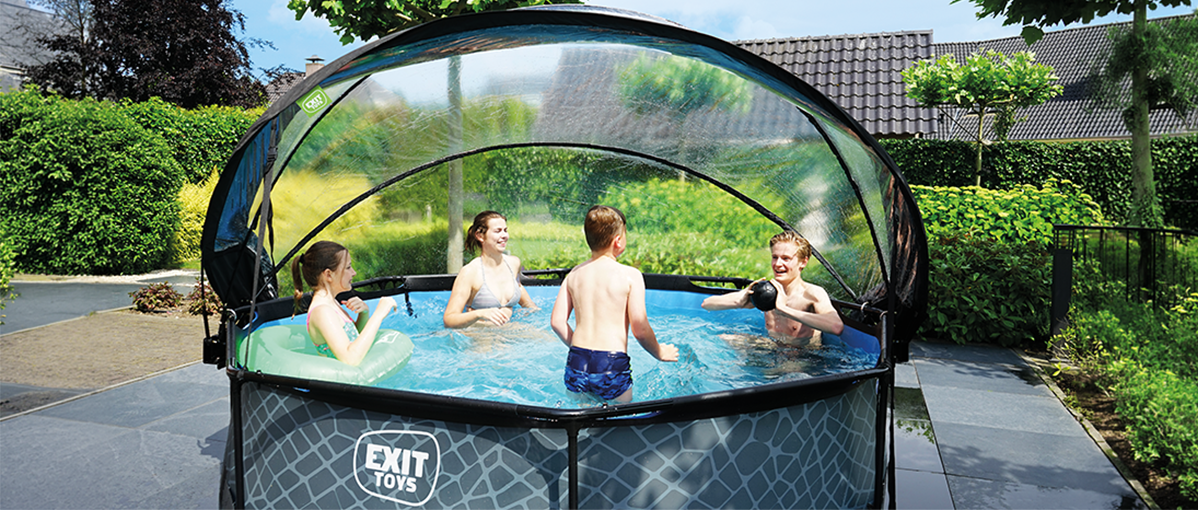
Want clear, fresh pool water all summer? Discover a simple maintenance routine: keep dirt out, let the filter pump do its job, test before you add anything, watch the extra risk moments and follow a handy weekly schedule.
An outdoor pool in the garden brings lots of fun on warm days. Cooling off after school, splashing together at the weekend or floating calmly in the sun: pleasant pool water makes it all that bit better. But pool water does not stay clear by itself.
Leaves, sand, sun cream, rain and warm weather all affect the water quality. Luckily, you do not need to be a pool expert to take good care of your water. With a fixed routine, you can keep an overview and know exactly when to test, clean or adjust.
In this blog, you can read how to maintain the water quality of your outdoor pool in a practical way. Want to see which products can help with that? Take a look at the pool maintenance page from EXIT Toys.
Good water quality means that your pool water is clean, clear and balanced. So it is not just about water that looks fresh. The water values also need to be right.
Think mainly of:
• total alkalinity
• the pH value
• the chlorine level
These values are connected. If you test the water in the right order, you can adjust it more precisely. Start with total alkalinity, then check the pH value and finally look at the chlorine level.
Want to dive deeper into this? In the blog about frame pool water testing and treatment, you can read more about measuring and adjusting the water values.
Maintaining pool water is easiest when you make it part of your routine. That way, you do not have to wait until the water becomes cloudy or feels strange. It is better to prevent the water from getting out of balance.
A practical basic routine:
• on every swimming day, scoop leaves, grass and other visible dirt out of the water
• cover the pool after swimming when it is not being used
• check the pool water two to three times a week with test strips
• regularly check whether the filter pump is working properly
• clean the filter material according to the manual
• test the water extra after heavy use, warm weather or lots of rain
By adding these steps to your weekly routine, pool maintenance stays manageable.
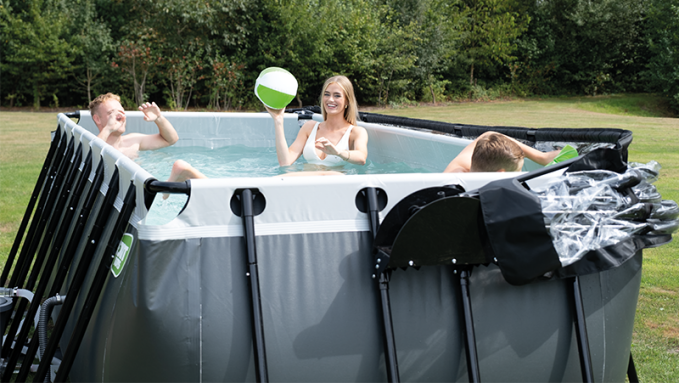
The less dirt gets into your pool, the easier the maintenance becomes. It sounds logical, but small habits can make a big difference.
This helps keep dirt out of the pool:
• let children rinse their feet before stepping into the pool
• place a foot bath by the entrance
• remove toys, leaves and insects from the water at the end of the day
• cover the pool when no one is swimming
• do not let children jump into the pool with sand, grass or mud on them
A foot bath, pool cover or pool dome can help with this. This way, less dirt gets into the water and the filter pump has to work less hard. You can find handy extras among the pool accessories from EXIT Toys.
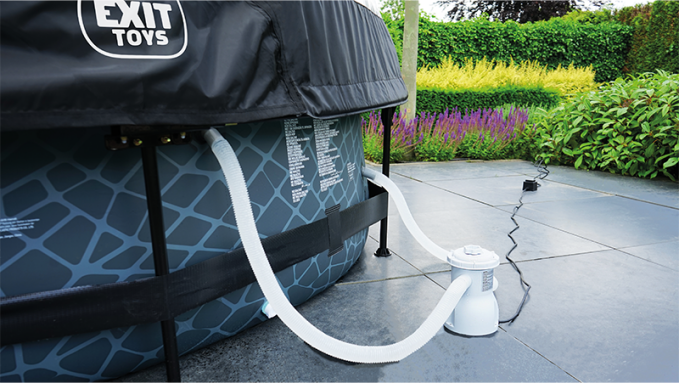
A filter pump helps keep the pool water moving and filters dirt out of the water. This makes it easier to keep the water clear. Standing water becomes cloudy more quickly, especially on warm days.
So keep a close eye on the filter pump:
• check whether the pump is running properly
• check whether the filter material is still clean enough
• clean or replace the filter material according to the manual
• use a filter pump that suits the water capacity of your pool
• let the pump run according to the instructions for use
Do you have a larger pool, or is it used a lot? Then a well-working filter pump is extra important. This keeps the water moving more effectively and filters dirt particles out of the pool. For suitable options, take a look at the pool pumps from EXIT Toys.
Cloudy water? Lots of swimming? Had rain? It can be tempting to add chlorine or other products straight away. Still, testing is the best first step. Only then will you know which value needs attention.
Keep to this order:
• test total alkalinity first
• then check the pH value
• measure the chlorine level last
• only then adjust where needed
This order is important because the values affect each other. Total alkalinity helps keep the pH value stable. The pH value then affects how chlorine works. If the basics are not right, chlorine may not be able to do its job as well.
Some days need a little more attention when it comes to your pool water. Especially in warm weather, the water can change more quickly. After a busy swimming day, more dirt can also end up in the pool.
Check the water quality extra:
• after a warm day
• after a rain shower
• after a busy swimming weekend
• if the pool has not been used for a few days
• if the water becomes cloudy
• if the bottom or wall feels slippery
• if there is a lot of sand, grass or leaves in the water
Do you notice a change in the water? Test first. Then you can make targeted adjustments.
Cloudy pool water often does not appear all at once. It usually starts with small signs: a little dirt on the bottom, water that is less clear or a filter that has to work harder. By responding quickly, maintenance stays manageable.
This helps prevent cloudy water:
• let the filter pump run long enough according to the manual
• remove visible dirt from the water straight away
• cover the pool when it is not being used
• check the water two to three times a week
• always use chlorine according to the instructions on the packaging
• clean filter material in time
• check the water extra after warm weather or heavy use
Want to know more about using chlorine and keeping your water values in balance? You can find useful information in this EXIT Toys blog about testing and treating frame pool water.
Chlorine helps disinfect pool water. Still, water quality is not just about chlorine. Total alkalinity and the pH value are just as important for the balance of the water.
Use chlorine carefully:
• always follow the instructions on the packaging
• check the water values with test strips first
• use a chlorine floater or skimmer for chlorine tablets
• do not place chlorine tablets loose in the pool
• take the chlorine floater out of the water when children go swimming
This keeps maintenance safe and manageable
Want to make things easy for yourself? Hang a short schedule in the shed, by the back door or with the pool supplies.
Before swimming
• briefly check whether the water is clear
• remove visible dirt from the pool
• let children rinse their feet
After swimming
• scoop dirt out of the water
• check whether the filter pump is working properly
• cover the pool
Two to three times a week
• test the water quality
• check total alkalinity first
• then measure the pH value
• check the chlorine level last
• adjust where needed
After rain or heavy use
• test the water again
• clean the bottom if there is dirt on it
• remove dirt from the water surface
• check the filter material
With cloudy water
• check the water values
• see whether the filter pump is working properly
• clean the filter material if needed
• then tackle the cause in a targeted way
With a schedule like this, pool maintenance becomes a small routine instead of a big job. Does something on your pool or pump need replacing? Then take a look at the frame pool and spa spare parts from EXIT Toys.
Maintaining the water quality of your outdoor pool is mainly about regular care. By keeping dirt out of the water, using the filter pump properly and testing the water regularly, your pool stays clearer and more pleasant to swim in.
This way, the pool is ready more quickly for the next dip. Grab a towel, rinse those feet and enjoy fresh pool water in the garden.
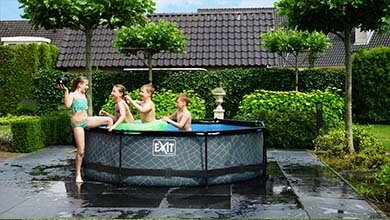
With an EXIT Toys heat pump you can enjoy your frame pool even during colder days. Curious about how a heat pump works? You can read all about it in this blog.
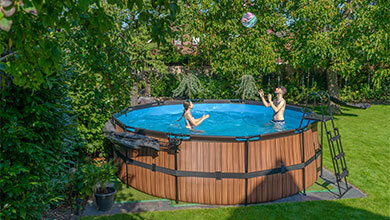
With an EXIT Toys pool skimmer you can easily get rid of slippery leaves and floating insects in your frame pool. In this blog you can read all about the skimmer.
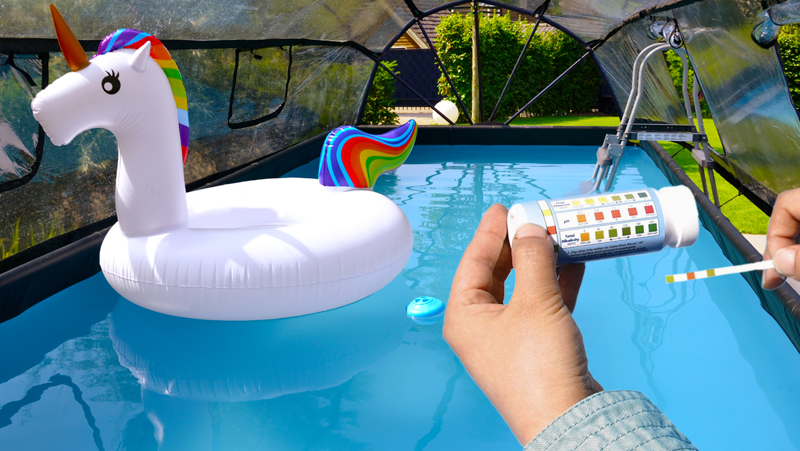
It is important to check the quality of the pool water regularly. Read more on how to go about that and what you need to be aware of in this EXIT Toys blog.
Our website uses cookies. We use functional, analytical, and tracking cookies to analyse traffic on our website and personalize content. This allows us to improve the user experience on the website.
By clicking 'Customize', you can learn more about the specific types of cookies and customize your preferences. By clicking 'Allow all cookies', you agree to the use of all cookies. You can find more information in our cookie policy.
For more information on how Google will use your personal data, please refer to Google's Privacy & Terms.
Stay informed about interesting offers and news!